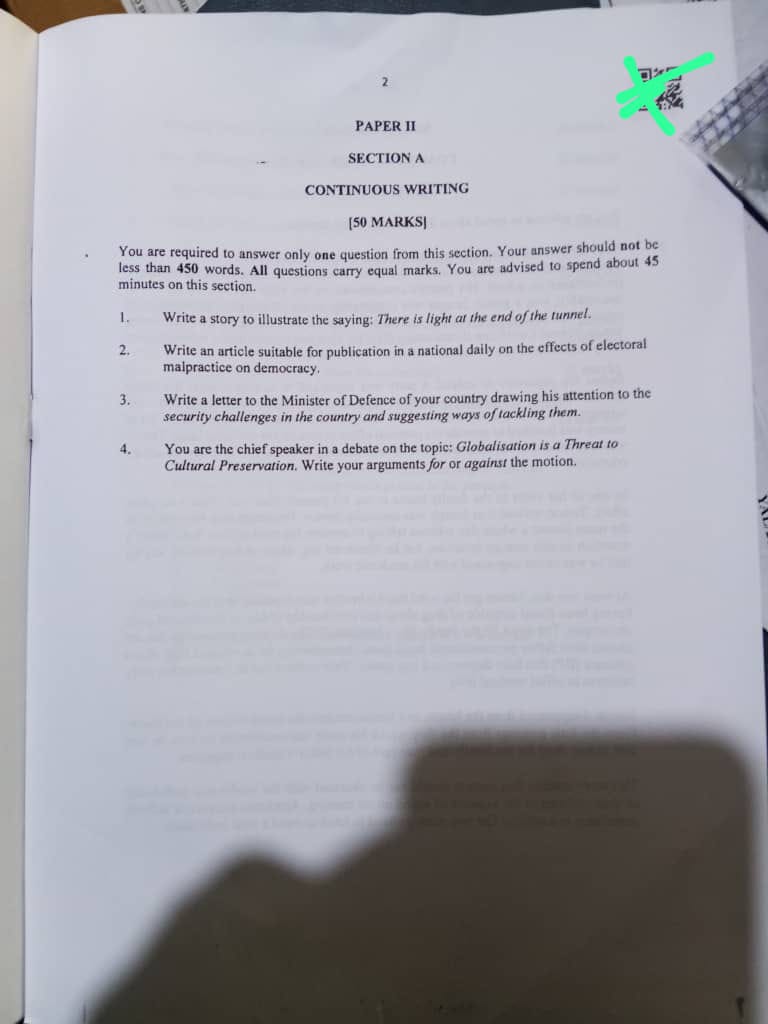
Question 2: Write an article suitable for publication in a national daily on the effects of electoral malpractice on democracy.
The Effects of Electoral Malpractice on Democracy
By Aishat Musa
Democracy is a system of government in which the people choose their leaders through free, fair, and credible elections. Elections give citizens the opportunity to decide who governs them and hold leaders accountable. However, when elections are manipulated through electoral malpractice, democracy is weakened, and the will of the people is ignored. Electoral malpractice has become a major challenge in many developing countries, including Nigeria, and its effects are far-reaching.
Electoral malpractice refers to all illegal and dishonest acts committed before, during, or after an election to influence the outcome in favour of a particular candidate or political party. Such practices include vote buying, ballot box snatching, multiple voting, intimidation of voters, falsification of election results, underage voting, and the use of violence to scare away opponents.
One major effect of electoral malpractice is that it destroys the credibility of elections. When elections are rigged, citizens lose confidence in the electoral process because they believe that their votes do not count. As a result, many eligible voters become discouraged and refuse to participate in future elections, leading to low voter turnout.
Another serious consequence is the emergence of incompetent and unpopular leaders. Instead of competent individuals being elected based on merit and the support of the people, dishonest politicians manipulate the process to gain power. Such leaders often lack accountability because they know they were not genuinely elected by the people.
Electoral malpractice also encourages political violence. During elections, rival political parties sometimes employ thugs to intimidate opponents, snatch ballot boxes, or attack electoral officials. These violent activities often result in the destruction of property, injuries, and even the loss of innocent lives. Such incidents create fear and insecurity within society.
Furthermore, electoral malpractice promotes corruption. Politicians who spend huge sums of money to buy votes or manipulate election results often see public office as an opportunity to recover their investments. Instead of providing quality healthcare, education, roads, and other social amenities, they divert public funds for personal gain, thereby slowing national development.
In addition, electoral malpractice weakens the rule of law. When electoral offenders go unpunished, it sends the wrong message that crime pays. This encourages further violations of electoral laws and reduces respect for democratic institutions.
The economy also suffers from electoral malpractice. Political instability caused by disputed elections discourages local and foreign investors from investing in the country. Businesses become uncertain about the future, leading to slower economic growth, increased unemployment, and poverty.
To address these problems, all stakeholders must play their roles effectively. The Independent National Electoral Commission (INEC) should continue to improve the transparency of elections through the use of technology and strict enforcement of electoral guidelines. Security agencies should remain neutral and ensure the safety of voters and election officials. The judiciary should prosecute and punish electoral offenders without fear or favour. Political parties must educate their members on peaceful campaigns and discourage violence, while citizens should reject vote buying and always vote according to their conscience.
The mass media and civil society organisations also have important roles to play by educating voters on their civic responsibilities and exposing electoral fraud wherever it occurs.
In conclusion, electoral malpractice remains one of the greatest threats to democracy because it undermines free and fair elections, encourages corruption, promotes violence, and hinders national development. Every citizen has a responsibility to protect the integrity of the electoral process. Only through credible elections can democracy flourish, good governance be achieved, and sustainable development become a reality.
RELATED POST
Write a story to illustrate the saying: There is light at the end of the tunnel.